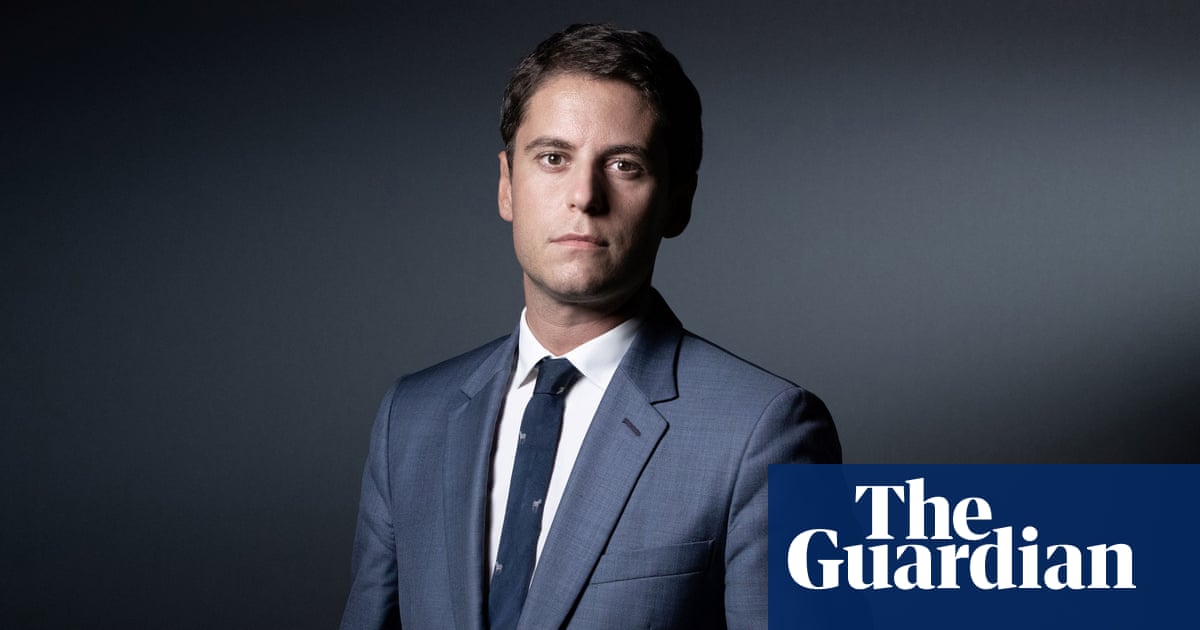
In an increasingly turbulent world, marked by geopolitical shifts and economic uncertainties, the call for renewed international cooperation has become more urgent than ever. At the forefront of this movement for France stands Gabriel Attal, a dynamic figure in French politics whose vision extends far beyond domestic policy. His recent emphasis on revitalizing relations between France and the United Kingdom, particularly in the post-Brexit era, signals a significant strategic shift. Attal's diplomatic overtures and his broader gabriel attal international agenda are not just about mending fences; they represent a strategic imperative for two historic European powers facing common challenges.
A New Dawn for Cross-Channel Diplomacy
For years, the relationship between France and the UK has been characterized by a certain frostiness, exacerbated by the complexities of Brexit. Gabriel Attal, the charismatic leader of President Emmanuel Macron’s Renaissance party, articulates this sentiment with striking clarity: "We are waking at the moment from a long sleep when we talk about relations between France and the UK." This powerful metaphor encapsulates a period where, despite shared history and geographical proximity, political ties seemed to drift, with many speculating that the English Channel would metaphorically transform into an ocean, severing historical bonds.
However, the global landscape has shifted dramatically, prompting a re-evaluation of alliances. The ongoing war in Ukraine, coupled with political instability in the United States, has underscored the need for strong, reliable partnerships within Europe. Attal suggests that this external pressure is, in some measure, "forcing" France and the UK to emerge from their diplomatic slumber. These shared security concerns and economic anxieties are creating fertile ground for a renewed dialogue, pushing both nations towards a pragmatic recognition of their intertwined destinies. Attal's drive to foster stronger bilateral ties is a cornerstone of his burgeoning gabriel attal international strategy, demonstrating a keen understanding of geopolitical realities.
From a strategic perspective, renewed Anglo-French cooperation could yield significant benefits:
- Enhanced Security: Joint efforts in defense, intelligence sharing, and support for Ukraine.
- Economic Stability: Collaborative initiatives to ease trade friction and foster economic growth post-Brexit.
- Geopolitical Influence: A stronger, united front on the international stage, particularly within European and global forums.
- Research & Innovation: Pooling resources and expertise in critical sectors like AI, green technology, and scientific research.
Gabriel Attal's Vision for Bilateral Ties
Attal's recent visit to London served as a clear demonstration of his commitment to rekindling the Franco-British relationship. During his trip, he engaged with various stakeholders, including the sizeable French expatriate community, which has seen its numbers dwindle since Brexit. His efforts to "gee them up" reflect a broader strategy to reconnect with the diaspora and underscore the enduring ties that bind the two nations, despite political divergences.
His itinerary was deliberately symbolic: a meeting with former UK Prime Minister Tony Blair, a figure synonymous with the "Third Way" and a period of close Anglo-French cooperation under Jacques Chirac, and a wreath-laying ceremony at the statue of Charles de Gaulle, France's wartime leader who sought refuge and led his Free French forces from London. These gestures communicate a desire to transcend recent political friction and tap into a deeper historical resonance of alliance and shared democratic values.
Attal's rhetorical prowess, which earned him the moniker "le snipeur des mots" (the word sniper), was evident in his address to the French community in Kensington. He deftly tackled the sensitive topic of Brexit, stating, "Liberty was given by the proponents of Brexit as a reason why they had to leave the EU. But being free is not being able to choose the colour of your passport. It is about being able to choose the face of your destiny." This powerful statement reframes the debate, moving beyond administrative choices to emphasize a shared agency in shaping a collective future. It's a nuanced approach that acknowledges past decisions while advocating for a forward-looking, pragmatic partnership.
Practical Implications of a Revitalized Relationship:
- For Businesses: Potential for reduced trade barriers, streamlined customs procedures, and collaborative investment opportunities.
- For Citizens: Enhanced cultural exchange programs, improved ease of travel, and potentially more straightforward residency processes.
- For Governments: Stronger coordination on issues like illegal immigration across the Channel, environmental protection, and counter-terrorism efforts.
The Rise of a Political Prodigy on the International Stage
Gabriel Attal's rapid ascent through the French political ranks has been nothing short of meteoric, marking a series of significant "firsts." At just 29, he became France's youngest postwar minister, taking charge of education. By January 2024, at 34, he shattered another record by becoming the nation's youngest-ever Prime Minister and the first openly gay individual to hold the office, garnering cheers in the National Assembly for his candor and pride. While his term as Prime Minister concluded prematurely following President Macron's snap election call, Attal quickly regrouped and now leads Macron's centrist Renaissance party, positioning himself squarely for the 2027 presidential race.
Despite not having officially declared his candidacy, Attal is fairly open about his presidential intentions. His ambitious international tour, which has included visits to Ukraine, Israel, and planned trips to Africa, is a clear sign of his efforts to build a robust gabriel attal international profile. These engagements are not merely ceremonial; they are strategic moves designed to familiarize him with global leaders, articulate his foreign policy stances, and demonstrate his capacity for statesmanship beyond domestic French issues. In a political landscape increasingly dominated by populist narratives, Attal aims to present a centrist, internationally engaged alternative to figures like Marine Le Pen. However, he faces the challenge of navigating President Macron's declining popularity and the government's lack of a working parliamentary majority, which could complicate his path to power.
Navigating Future Challenges and Opportunities
While the prospect of revitalized France-UK relations under a potential Attal presidency is promising, it is not without its challenges. The lingering effects of Brexit, including trade friction and divergent regulatory approaches, will require careful negotiation and a commitment to finding common ground. Domestic political landscapes in both countries also play a crucial role; any significant shift in leadership or public sentiment could impact the momentum for cooperation.
However, the opportunities for collaboration far outweigh these hurdles. Beyond immediate security concerns, France and the UK share deep cultural ties, robust educational exchanges, and a rich history of innovation. A renewed partnership could unlock significant potential in:
- Energy Security: Joint projects in nuclear power, renewable energy, and grid connectivity.
- Climate Change: Coordinated efforts and leadership in international climate forums, sharing best practices in green transitions.
- Digital Transformation: Collaboration on cybersecurity, AI ethics, and digital infrastructure projects, leveraging their respective tech strengths.
- Cultural Exchange: Revitalizing student exchange programs, artistic collaborations, and tourism initiatives to strengthen people-to-people bonds.
For example, practical steps could include forming joint working groups on specific policy areas, increasing bilateral ministerial meetings, or even re-evaluating certain post-Brexit agreements to ensure they serve the mutual interests of both nations.
Gabriel Attal's push for a re-energized relationship with the UK reflects a broader vision for France's role in a complex world. By looking beyond the divisions of the recent past and focusing on shared values and common threats, he aims to forge a robust partnership that benefits not only France and the UK but also contributes to broader European stability and prosperity. His gabriel attal international agenda is clearly designed to position him as a leader capable of uniting, rather than dividing, and his initiatives towards the UK are a crucial test of this ambition.